



Chloride Channel
Cl− Channels
Chloride channels belong to a superfamily of ion channels that permit passive passage of anions, mainly chloride, across cell membrane. Chloride channels perform important roles in the regulation of cellular excitability, in transepithelial transport, cell volume regulation, and acidification of intracellular organelles. Chloride channels represent a group of potential drug targets.
The chloride channel protein (ClC) family comprises both chloride (Cl-) channels and chloride/proton (Cl-/H+) antiporters. In prokaryotes and eukaryotes, these proteins mediate the movement of Cl- ions across the membrane. In eukaryotes, ClC proteins play a role in the stabilization of membrane potential, epithelial ion transport, hippocampal neuroprotection, cardiac pacemaker activity and vesicular acidification.
All Product Categories
-
Chloride Channel Related Products (125)
Related Products (125)

-
Antibodies (3)

-
CBIQ
 0 ImagesSynonyms: 4-Chlorobenzo[f]isoquinolineCBIQ (4-Chlorobenzo[f]isoquinoline) is a benzoisoquinoline compound. CBIQ can activate the cystic fibrosis transmembrane conductance regulator (CFTR) Cl- ion channels and the intermediate-conductance calcium-sensitive K+ channel (KCNN4) with Kd values of 0.1 and 3.9 μM. CBIQ can be used for the research related to cystic fibrosis.
-
Kudinoside D
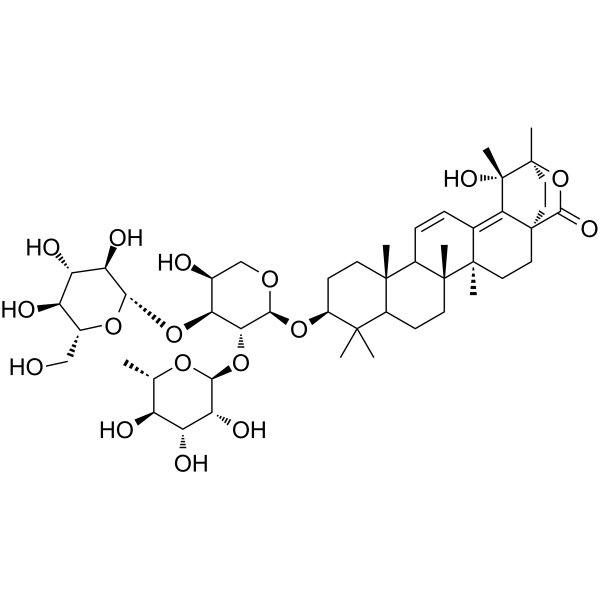 0 ImagesKudinoside D is a triterpenoid saponin. Kudinoside D is isolated from the leaves of Ilex kudingcha. Kudinoside D enhances the phosphorylation levels of AMPK and its downstream molecule ACC, and inhibits the expression of PPARγ, C/EBPα, SREBP-1c as well as the target genes of adipogenic transcription factors. Kudinoside D inhibits the activity of ANO1. Kudinoside D possesses hypolipidemic activity. Kudinoside D can be used in obesity-related research.
-
Cerebrocrast
 0 ImagesCat. No.: HY-106808CAS No.: 118790-71-9Synonyms: IOS-1.1212Cerebrocrast (IOS-1.1212) is a 1,4-dihydropyridine (DHP) derivative. Cerebrocrast has a high affinity for the membrane lipid bilayer and it can easily penetrate the blood-brain barrier and incorporate into the plasma and organelle membranes, including those of mitochondria. Cerebrocrast promotes the cotransport of H+ and Cl- in rat liver mitochondria. Cerebrocrast also exhibits neuroprotective and cognition enhancer properties.
-
NS1652
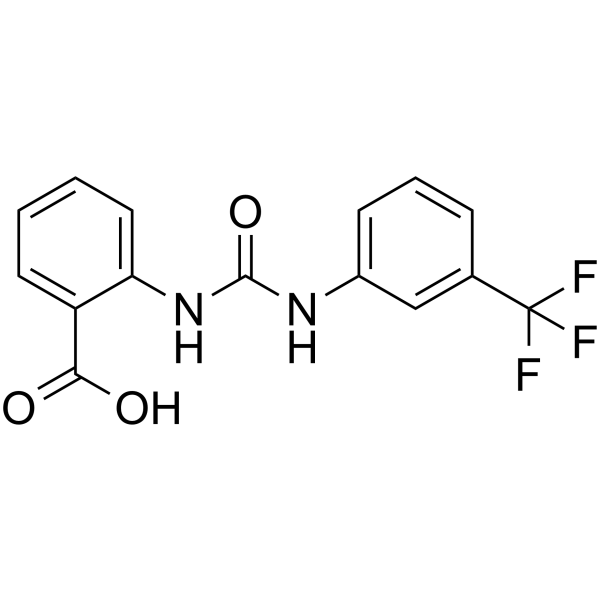 0 ImagesNS1652 is a reversible anion conductance inhibitor, blocks chloride channel, with an IC50 of 1.6 μM in human and mouse red blood cells.
-
Kobusin
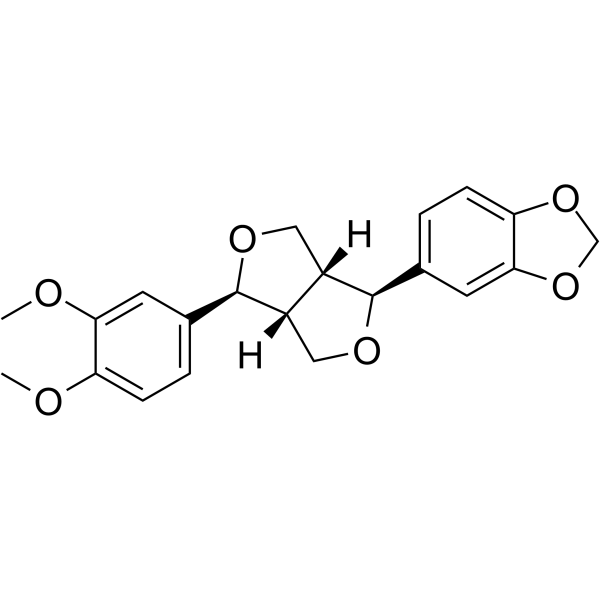 0 ImagesKobusin is a bisepoxylignan isolated from the Pnonobio biondii Pamp. Kobusin is an activator of CFTR and CaCCgie chloride channels and a inhibitor of ANO1/CaCC (calcium-activated chloride channel) channel.
-
T16A(inh)-C01
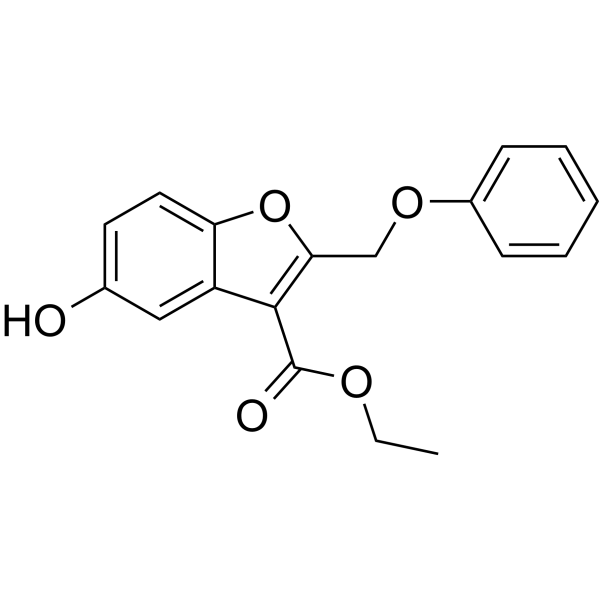 0 ImagesCat. No.: HY-118170CAS No.: 171506-87-9T16A(inh)-C01 is an inhibitor of TMEM16A (ANO1). T16A(inh)-C01 blocks chloride channel mediated by ANO1 with an IC50 of 8.4 μM, without interfering with calcium signaling.
-
Afoxolaner (Standard)
 0 ImagesAfoxolaner (Standard) is the analytical standard of Afoxolaner. This product is intended for research and analytical applications. Afoxolaner is an orally active isoxazoline insecticide/acaricide against Ixodes scapularis in dogs. Afoxolaner acts on the insect γ-aminobutyric acid receptor (GABA) and glutamate receptors, inhibiting GABA & glutamate-regulated uptake of chloride ions, resulting in excess neuronal stimulation and death of the arthropod.
-
Umifoxolaner
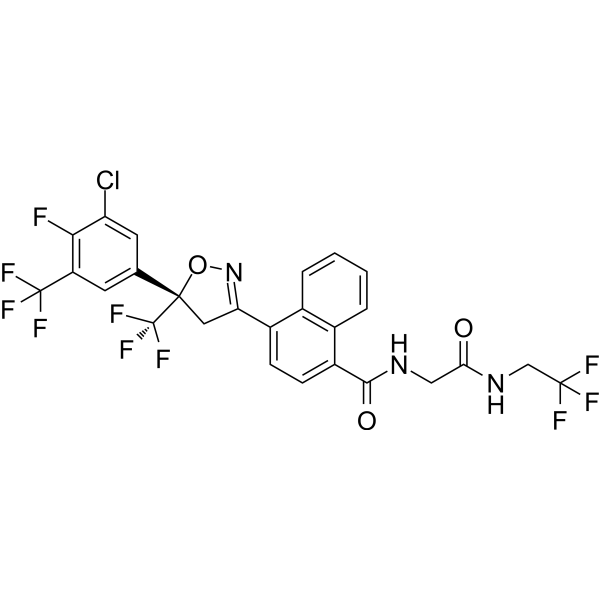 0 ImagesSynonyms: ML-878Umifoxolaner (ML-878), a γ-aminobutyric acid (GABA) regulated chloride channels antagonist, is a potent insecticide, and acaricide. Umifoxolaner can be uesd for parasite infection research.
-
Ammonium chloride, for molecular biology
 0 ImagesCat. No.: HY-Y1269DCAS No.: 12125-02-9Synonyms: Salmiac, for molecular biologyAmmonium chloride (Salmiac), for molecular biology is an inhibitor of Slc26a4 and SMAD2. Ammonium chloride, for molecular biology reduces the protein expression level of Slc26a4 in lung tissue, and attenuates ozone-induced increases in proinflammatory cytokines, inflammatory cells, pulmonary resistance, goblet cell hyperplasia, peribronchial inflammation and thiocyanate levels in mouse tissues and bronchoalveolar lavage fluid. Ammonium chloride, for molecular biology decreases the level of phosphorylated SMAD2, inhibits autophagy by reducing autophagy-related proteins, and enhances Cisplatin (HY-17394)-induced cancer cell apoptosis and DNA double-strand breaks. Ammonium chloride, for molecular biology also inhibits the TCA cycle, reduces ATP production, increases glucose utilization, regulates the levels of lactic acid, glutamic acid and ATP, and induces morphological degeneration of neuroblastoma cells. Ammonium chloride, for molecular biology can be used in studies related to ozone-induced airway injury, hepatocellular carcinoma, human cervical cancer, hepatic encephalopathy, Reye syndrome, epilepsy and neurodegenerative diseases.
-
TMEM16A modulator-1
 0 ImagesCat. No.: HY-171333CAS No.: 2367645-32-5TMEM16A modulator-1 (compound 36) is a positive modulator of the calcium-activated chloride channel (CaCC) TMEM16A. TMEM16A modulator-1 can be used for TMEM16A-related diseases research, particularly respiratory diseases and conditions.
-
ANO1-IN-5
 0 ImagesCat. No.: HY-175669ANO1-IN-5 is an orally active ANO1 inhibitor with an IC50 of 4.57 μM. J ANO1-IN-5 demonstrates 118-, 642-, and 10000-fold selectivity over α1A-,α1B-, andα1D-AR, respectively. ANO1-IN-5 exhibits significant inhibitory effects on osteoclast differentiation and function. ANO1-IN-5 can used for the study of osteoporosis.
-
Tigolaner-d4
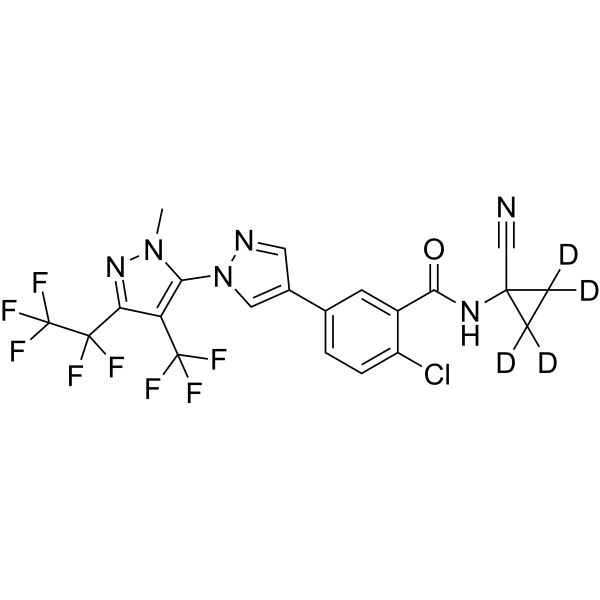 0 ImagesCat. No.: HY-109077STigolaner-d4 is deuterium labeled Tigolaner. Tigolaner (BAY-1272858) acts on γ-aminobutyric acid (GABA) and glutamate-gated chloride channels. Tigolaner has antiparasitic activity.

-
BL-1021
 0 ImagesCat. No.: HY-115359CAS No.: 1002331-76-1BL-1021 is an orally active ion channel blocker. BL-1021 significantly reduces symptoms of neuropathic pain without noticeable sedation or cardiac arrhythmias. BL-1021 can be used in the research of acute and chronic pain.
-
ANO1-IN-3
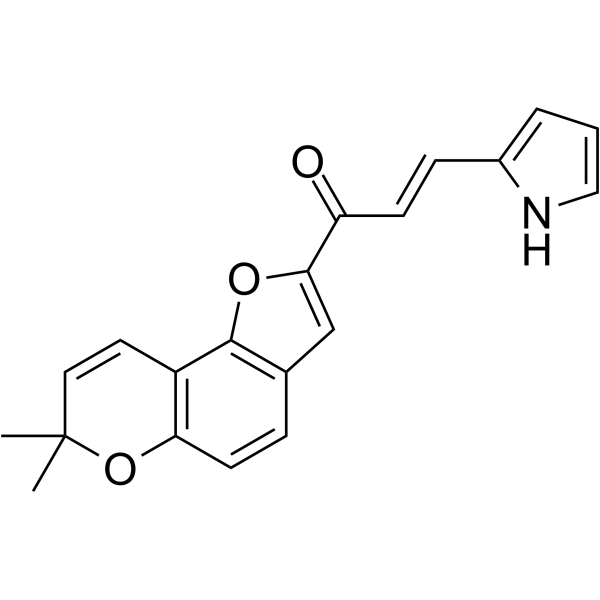 0 ImagesCat. No.: HY-147874CAS No.: 2494280-04-3ANO1-IN-3 (Compound 3n) is a potent and selective ANO1 inhibitor with an IC50 of 1.23 μM. ANO1-IN-3 induces apoptosis.
-
ANO1-IN-2
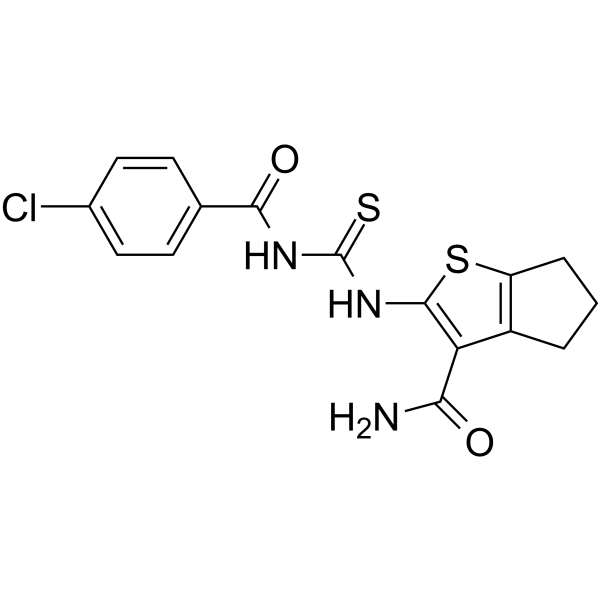 0 ImagesCat. No.: HY-146321CAS No.: 637314-12-6ANO1-IN-2 (Compound 10q) is a selective ANO1 channel blocker with an IC50 of 1.75 μM and 7.43 μM against ANO1 and ANO2, respectively. ANO1-IN-2 suppresses strongly proliferation of glioblastoma cells.
-
Cobiprostone
 0 ImagesCat. No.: HY-14764CAS No.: 333963-42-1Synonyms: SPI 8811Cobiprostone (SPI 8811) is a type-2 chloride channel activator. Cobiprostone protects against Indomethacin (HY-14397)-induced depolarization of mitochondrial membrane potential and reverses the loss of mitochondrial membrane potential. Cobiprostone protects against NSAID-induced cellular damage.
-
Antitumor agent-201
 0 ImagesCat. No.: HY-173331Antitumor agent-201 (Compound 10) is a chloride transport activator that targets the Golgi apparatus. Its EC50 for promoting the transmembrane transport of chloride ions is 1.53 mol%, and its IC50 against HepG2 cells is 7.13 μM. Antitumor agent-201 exerts its anti-cancer activity by selectively acting on the Golgi apparatus, disrupting the chloride ion homeostasis within it, reducing the expression of key proteins such as GM130 and GRASP55, altering the structure and function of the Golgi apparatus, triggering Autophagy of the Golgi apparatus, and further inducing Apoptosis of cancer cells and arresting cancer cells in the G2/M phase. Antitumor agent-201 can be used in the research field of cancer diseases.
-
NS3736
 0 ImagesCat. No.: HY-164532CAS No.: 265646-94-4NS3736 is an orally effective chloride channel inhibitor that can be used for the research of osteoporosis. NS3736 targets the CIC-7 channel in osteocytes, blocks osteoclast acidification and resorption in vitro, with IC50=30 μM. In a rat model of ovariectomy-induced osteoporosis, NS3736 can enhance bone strength and bone density.




